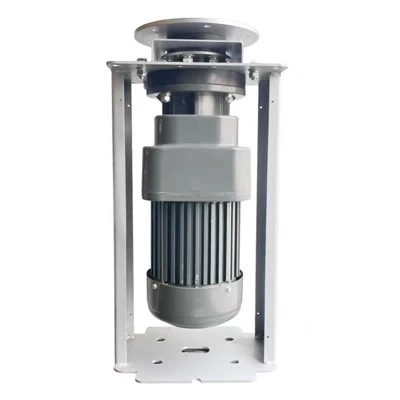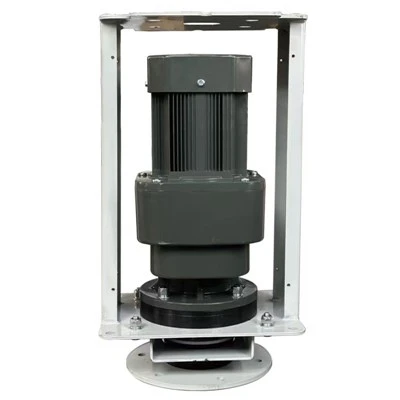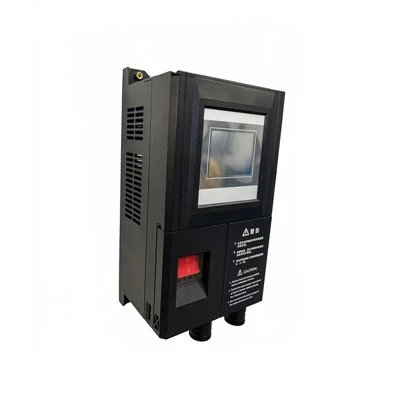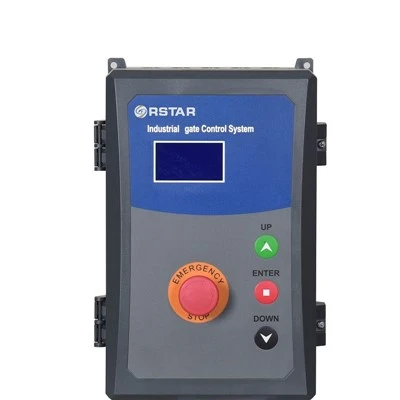

Hey there! As a supplier of Three - phase Induction Reduction Motors, I've seen firsthand how important it is to understand the ins and outs of these motors. One key factor that can significantly impact their performance is slip. In this blog, I'll break down what slip is, how it affects the performance of a three - phase induction reduction motor, and why it matters to you.
What is Slip?
Let's start with the basics. Slip is a term used to describe the difference between the synchronous speed of the rotating magnetic field in the motor and the actual speed of the rotor. The synchronous speed ($N_s$) of a three - phase induction motor is determined by the frequency of the power supply ($f$) and the number of poles ($p$) in the motor, and it can be calculated using the formula $N_s=\frac{120f}{p}$.
The actual speed of the rotor ($N$) is always less than the synchronous speed. The slip ($s$) is then calculated as a percentage using the formula $s=\frac{N_s - N}{N_s}\times100%$. For example, if the synchronous speed of a motor is 1800 RPM and the actual rotor speed is 1750 RPM, the slip would be $s=\frac{1800 - 1750}{1800}\times100%\approx2.78%$.
How Slip Affects Motor Torque
One of the most significant ways slip affects the performance of a three - phase induction reduction motor is through its impact on torque. Torque is the rotational force that the motor can produce, and it's crucial for applications where the motor needs to drive a load.
At low slips (close to 0%), the torque produced by the motor is relatively low. As the slip increases, the torque also increases, reaching a maximum value at a certain slip point called the breakdown slip. Beyond the breakdown slip, if the slip continues to increase, the torque starts to decrease.
This relationship between slip and torque is essential for understanding how the motor will perform under different load conditions. For instance, when a motor is starting up, it experiences a high slip because the rotor is initially at rest. This high slip allows the motor to generate a high starting torque, which is necessary to overcome the inertia of the load and get it moving.
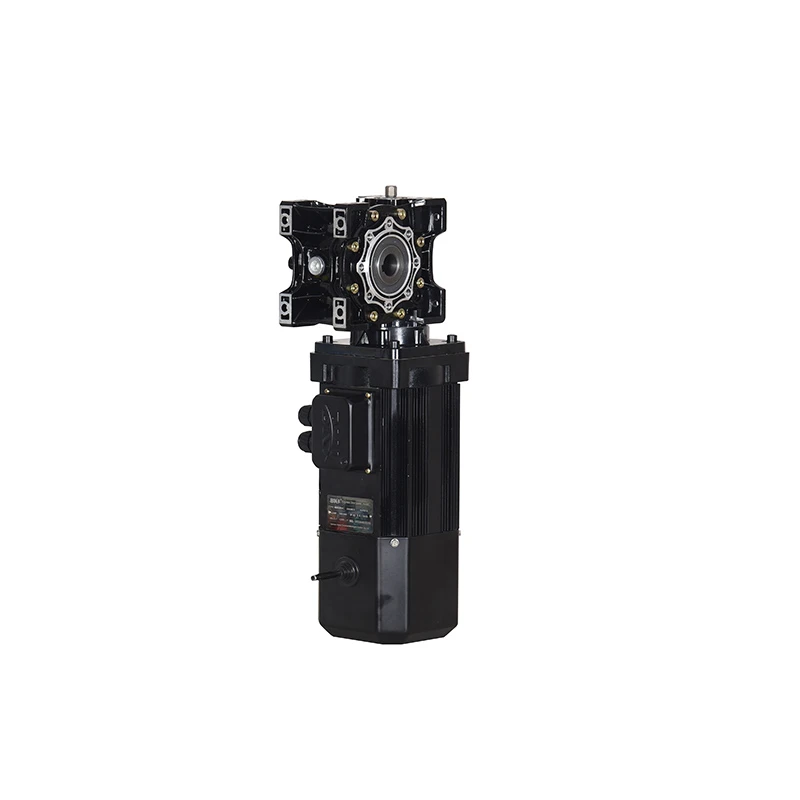
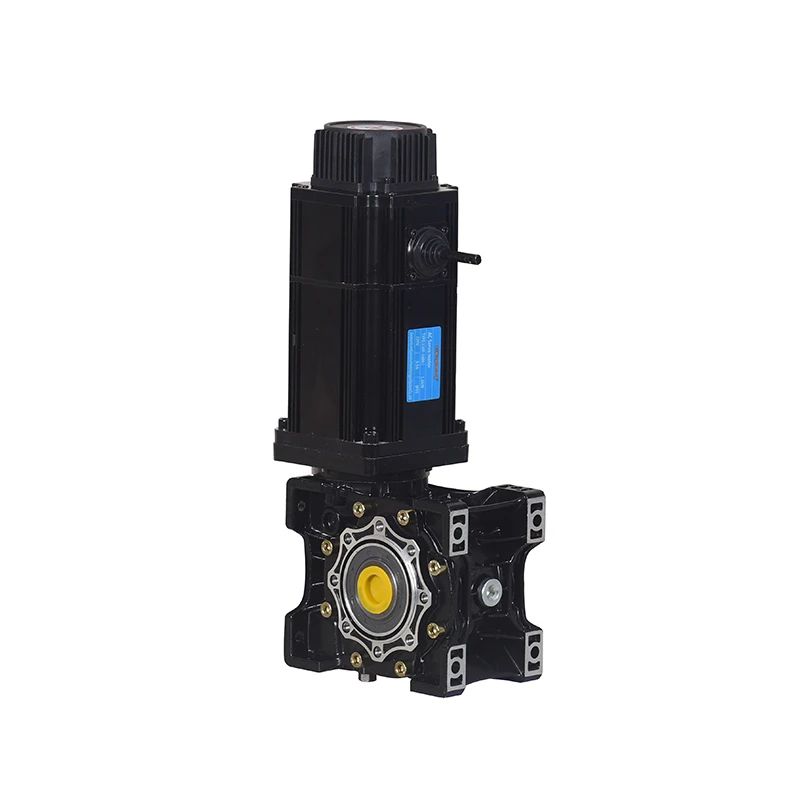
Impact on Motor Efficiency
Slip also has a direct impact on the efficiency of a three - phase induction reduction motor. Efficiency is a measure of how effectively the motor converts electrical energy into mechanical energy.
When the slip is low, the motor operates closer to its synchronous speed, and the losses due to slip are minimized. This results in higher efficiency. However, as the slip increases, more energy is lost in the form of heat in the rotor windings. This heat loss reduces the overall efficiency of the motor.
In applications where energy efficiency is a priority, it's important to operate the motor at a slip value that balances the required torque with the need for high efficiency. For example, in a continuous - running application like a conveyor belt, minimizing slip can lead to significant energy savings over time.
Influence on Motor Speed Regulation
Another aspect of motor performance affected by slip is speed regulation. Speed regulation refers to the ability of the motor to maintain a relatively constant speed under varying load conditions.
A motor with a low slip has better speed regulation because the difference between the synchronous speed and the actual rotor speed is small. As the load on the motor increases, the slip will increase slightly, but the change in speed will be minimal. On the other hand, a motor with a high slip will experience a more significant change in speed as the load varies.
In applications where precise speed control is required, such as in a Rapid Door 3 - Phase Geared Motor or a Servo Geared Motor for High Speed Door, a motor with good speed regulation is essential.
Slip and Motor Heating
As mentioned earlier, an increase in slip leads to more heat being generated in the rotor windings. This heat can have a detrimental effect on the motor's performance and lifespan.
Excessive heat can cause the insulation of the motor windings to degrade, leading to short - circuits and motor failure. It can also increase the internal resistance of the motor, further reducing its efficiency.
To prevent overheating, it's important to select a motor with an appropriate slip rating for the application. In applications where the motor is likely to experience high loads or frequent starts and stops, a motor with a lower slip may be more suitable to reduce heat generation.
Practical Considerations for Selecting a Motor Based on Slip
When selecting a three - phase induction reduction motor for your application, it's important to consider the slip characteristics. Here are some practical tips:
- Starting Torque Requirements: If your application requires a high starting torque, such as in a Three - phase Induction Reduction Motor used for a heavy - duty conveyor, you may need a motor with a higher slip to generate the necessary starting torque.
- Efficiency Goals: If energy efficiency is a top priority, look for a motor with a low slip. This will help minimize energy losses and reduce operating costs over the long term.
- Speed Regulation Needs: For applications that require precise speed control, choose a motor with good speed regulation, which typically means a low slip.
Other Related Motor Types
In addition to three - phase induction reduction motors, there are other types of motors that you may also consider for your application. For example, Flameproof Asynchronous Motor is suitable for hazardous environments where there is a risk of explosion. And Explosion - proof Servo Asynchronous Motor combines the benefits of explosion - proof design with servo control for more precise operation.
Conclusion
In conclusion, slip plays a crucial role in the performance of a three - phase induction reduction motor. It affects torque, efficiency, speed regulation, and motor heating. By understanding how slip works and its impact on motor performance, you can make more informed decisions when selecting a motor for your application.
If you're in the market for a three - phase induction reduction motor or any of the related motor types I've mentioned, I'd love to have a chat with you. We can discuss your specific requirements and find the best motor solution for your needs. Don't hesitate to reach out for a purchase negotiation.
References
- Fitzgerald, A. E., Kingsley, C., & Umans, S. D. (2003). Electric Machinery (6th ed.). McGraw - Hill.
- Chapman, S. J. (2012). Electric Machinery Fundamentals (5th ed.). McGraw - Hill.