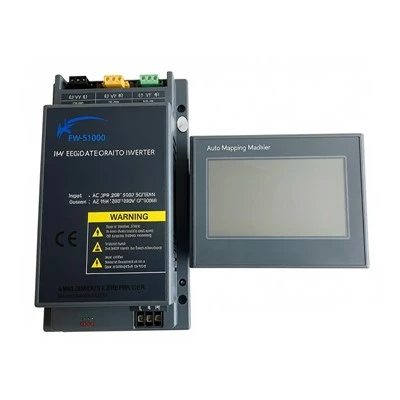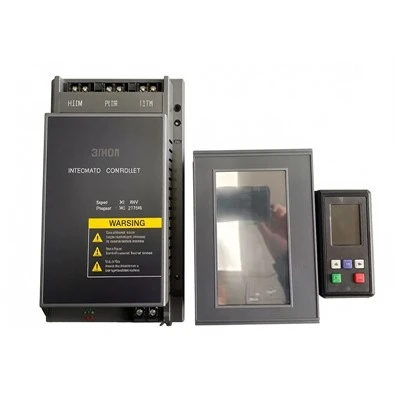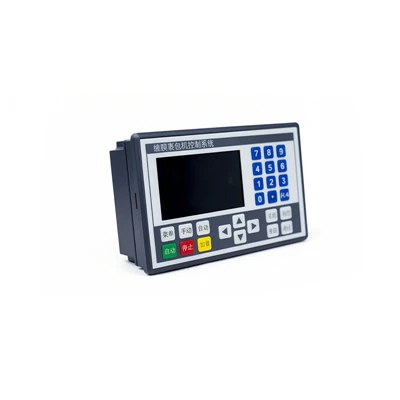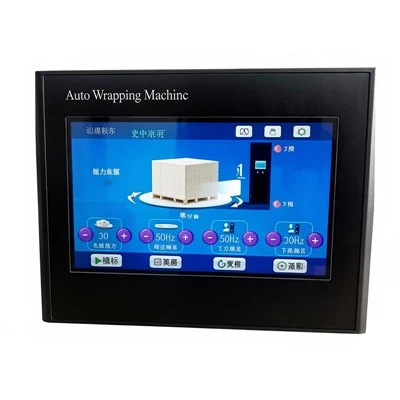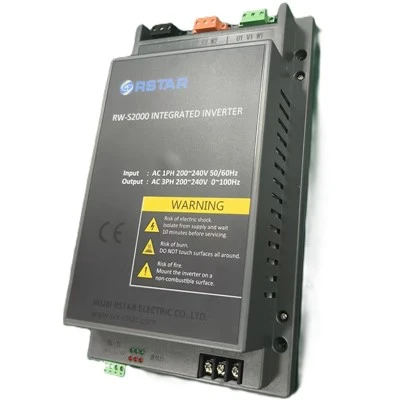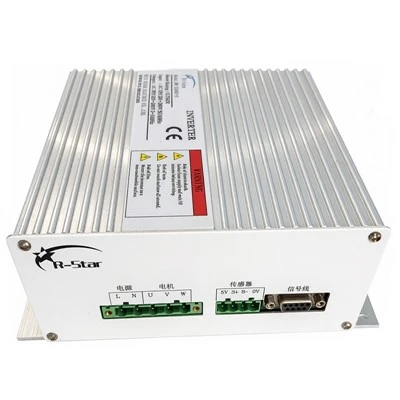
An industrial fan controller is the core control device of a large industrial ventilation system. Its structural design directly affects operational stability, control accuracy, and service life. Since industrial fans often operate in large spaces with long working hours and high loads, the controller structure must integrate electrical performance, safety protection, heat dissipation, and intelligent expansion capabilities to ensure reliable long-term operation.
An industrial fan controller generally consists of a control module, power drive module, monitoring module, protection module, and human-machine interface module. These functional units work together through electrical connections and signal communication to manage fan start and stop operations, speed regulation, system monitoring, and fault protection. The modular structure improves system reliability while making maintenance and future upgrades more convenient.
The control module is the central part of the controller and is responsible for receiving commands and processing control logic. Modern controllers typically use microprocessors or intelligent control chips to manage fan operation according to preset parameters. Through software-based control, the system can support different operating modes and adjust performance according to actual requirements, improving control precision and energy efficiency.
The power drive module is responsible for electrical conversion and output regulation. By using variable frequency technology, the controller can adjust motor operating frequency and achieve smooth speed control. Compared with traditional control methods, variable frequency drive structures reduce starting impact, lower operating noise, improve energy efficiency, and extend motor service life.
The monitoring and protection module plays an important role in ensuring safe operation. Industrial fan controllers are usually equipped with current monitoring, voltage monitoring, temperature detection, and protection circuits to continuously evaluate equipment conditions. When problems such as overload, overheating, or abnormal voltage occur, the controller can quickly activate protective functions to prevent damage and improve overall system safety.
Modern industrial fan controllers also focus on intelligent structural design. By integrating communication interfaces, sensor modules, and data collection functions, controllers can support remote monitoring, automatic adjustment, and connection with intelligent management platforms. These features allow industrial fans to better meet the requirements of smart factories and energy-saving management systems.
Overall, the structural characteristics of industrial fan controllers reflect the development trend toward modular design, intelligent control, enhanced safety, and improved efficiency. Through optimized structure and advanced control technology, industrial fan controllers provide more reliable, energy-efficient, and intelligent ventilation solutions for modern industrial environments.