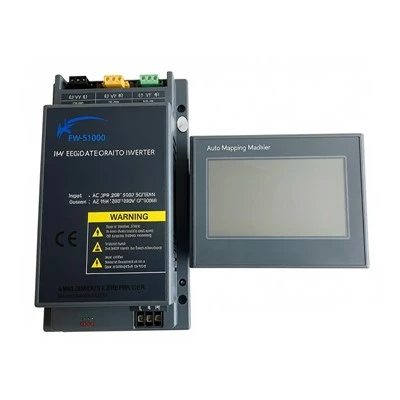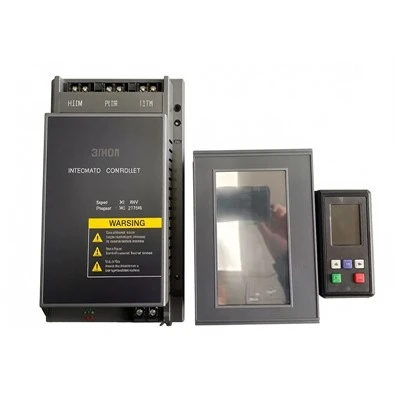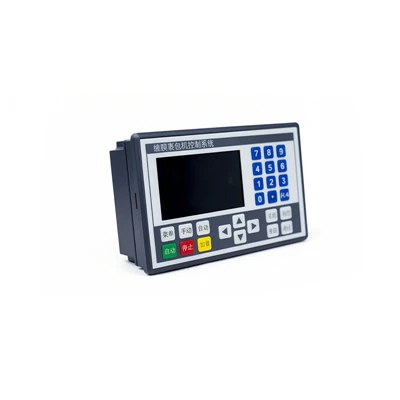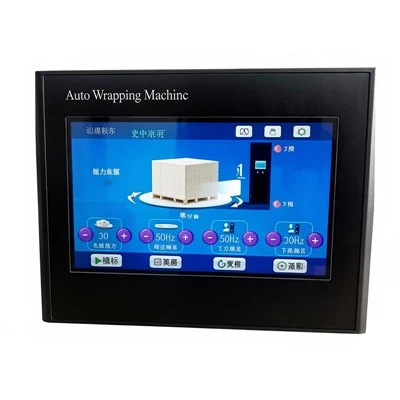
Stretch wrapping machine control systems have evolved significantly with the advancement of industrial automation, resulting in a variety of control solutions designed for different production requirements and packaging applications. Depending on the control method, level of automation, and system architecture, these control systems can generally be classified into relay-based control systems, PLC-based control systems, and intelligent networked control systems. Each type offers distinct advantages in terms of functionality, reliability, and scalability.
Relay-based control systems represent the earliest generation of wrapping machine control technology. They rely on relays, contactors, and timing devices to manage machine operations. Although this type of system features a simple structure and relatively low cost, it offers limited flexibility and requires more complicated wiring and maintenance. As manufacturing environments have become increasingly automated, relay-based systems have gradually been replaced by more advanced control technologies.
PLC-based control systems are now the industry standard for modern stretch wrapping machines. A programmable logic controller provides precise coordination of machine functions, including turntable rotation, film carriage movement, film tension control, automatic load detection, and fault monitoring. PLC systems are highly reliable, easy to program, and capable of adapting to different packaging requirements. Their modular design also simplifies maintenance and future system upgrades, making them suitable for a wide range of industrial applications.
The latest generation of control systems incorporates intelligent networking capabilities. In addition to conventional machine control, these systems support industrial communication protocols, remote monitoring, production data collection, and integration with manufacturing execution systems, conveyor lines, and robotic palletizing equipment. Operators and production managers can monitor equipment status in real time, analyze operational data, and perform remote diagnostics, enabling more efficient maintenance and smarter production management.
As Industry 4.0 technologies continue to develop, stretch wrapping machine control systems are becoming increasingly intelligent, connected, and data-driven. Future control platforms will provide greater automation, improved equipment performance, and seamless integration with digital manufacturing environments, helping companies achieve higher productivity, lower operating costs, and more flexible packaging operations.