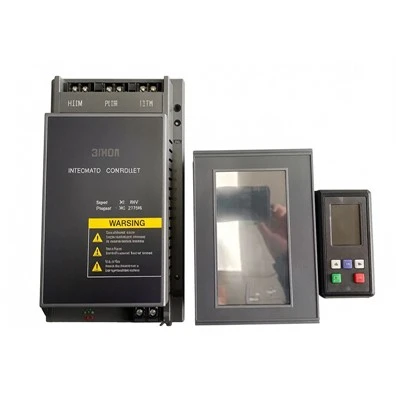

Hey there! As a supplier of Closed Loop Vector Control VFDs, I often get asked this question: Does Closed Loop Vector Control VFD need a feedback device? Well, let's dig deep into this topic.
First off, let's understand what a Closed Loop Vector Control VFD is. It's a type of variable frequency drive that offers precise control of motor speed and torque. This control method uses complex algorithms to calculate and adjust the motor's performance, making it suitable for applications where high accuracy and dynamic response are required.
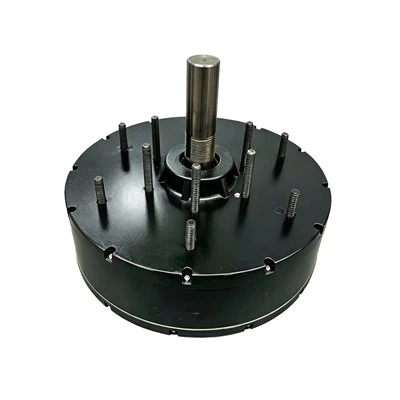
Now, let's talk about feedback devices. A feedback device, like an encoder or a resolver, provides information about the motor's actual speed, position, or torque. This data is crucial because it allows the VFD to compare the actual motor performance with the desired setpoint.
So, does a Closed Loop Vector Control VFD need a feedback device? The short answer is yes, in most cases. The whole point of a closed - loop system is to use feedback to correct any errors between the desired and actual performance. Without a feedback device, the VFD would be operating in an open - loop mode, which means it has no way of knowing if the motor is actually running at the desired speed or torque.
Let's take a look at some of the reasons why a feedback device is essential for a Closed Loop Vector Control VFD.
Precision Control
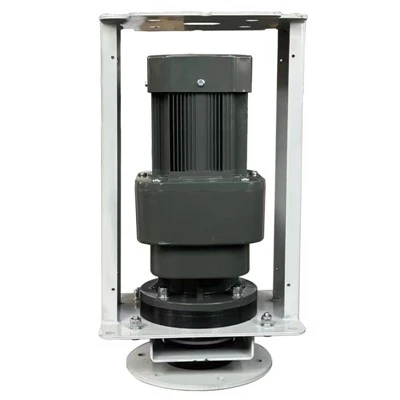
One of the main advantages of a Closed Loop Vector Control VFD is its ability to provide precise control. For example, in applications like Rotary Pallet Wrapper Full System, where the wrapping speed and tension need to be accurately controlled, a feedback device is crucial. The encoder can accurately measure the motor's speed and position, and the VFD can then adjust the output voltage and frequency accordingly to ensure that the wrapping process is smooth and consistent.
Load Compensation
When a motor is operating under variable loads, the torque requirements change. A feedback device can detect these changes in the motor's performance. For instance, if the load on the motor suddenly increases, the encoder will sense a drop in speed. The VFD can then increase the output torque to maintain the desired speed. This load compensation ability is especially important in industrial applications where the load can vary significantly.
Dynamic Response
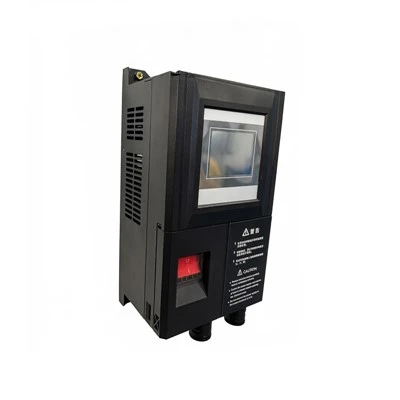
In applications that require quick acceleration and deceleration, like those using Three - in - one Inverter for Stretch Wrapper, a feedback device helps the VFD to respond quickly to changes in the speed reference. Without feedback, the VFD would have a slower response time, which could lead to overshooting or undershooting of the desired speed.
However, there's also the option of Sensorless Vector VFD, which doesn't require a physical feedback device. Sensorless vector control uses mathematical algorithms to estimate the motor's speed and position based on the input voltage and current measurements. This can be a cost - effective solution for some applications where high precision is not critical. But it's important to note that sensorless vector control may not be as accurate as closed - loop vector control with a feedback device, especially under heavy or variable loads.
Let's consider the drawbacks of not using a feedback device in a Closed Loop Vector Control VFD.
Lack of Accuracy
As mentioned earlier, without a feedback device, the VFD has no way of knowing the actual motor performance. This can lead to inaccurate speed and torque control, which may not be acceptable in applications that require high precision, such as in some Photoelectric Light Switch applications where the operation of the switch may depend on the precise movement of the motor.
Limited Load Handling
An open - loop system is less capable of handling variable loads. When the load changes, the motor may experience significant speed variations, and the VFD won't be able to compensate effectively without the feedback information. This can result in poor performance and even motor damage in extreme cases.
Difficult Troubleshooting
In a closed - loop system, the feedback device can also help with troubleshooting. If there's a problem with the motor's performance, the VFD can use the feedback data to diagnose the issue. Without a feedback device, it can be much more difficult to identify the root cause of the problem.
Now, let's touch on the types of feedback devices commonly used with Closed Loop Vector Control VFDs.
Encoders
Encoders are the most widely used feedback devices. There are two main types: incremental encoders and absolute encoders. Incremental encoders provide information about the change in the motor's position, while absolute encoders can provide the exact position of the motor at any given time. Encoders are highly accurate and can provide a high resolution of position and speed data.
Resolvers
Resolvers are another type of feedback device. They are rugged and suitable for harsh environments. Resolvers work based on the principle of electromagnetic induction to provide information about the motor's position and speed. Although they may not be as accurate as encoders, they are more resistant to dust, moisture, and vibration.
In conclusion, while it's technically possible to operate a Variable Frequency Drive without a feedback device using sensorless vector control, for most applications that require high precision, load compensation, and dynamic response, a Closed Loop Vector Control VFD definitely needs a feedback device.


If you're in the market for a Closed Loop Vector Control VFD or have any questions about whether you need a feedback device for your specific application, don't hesitate to reach out. We're here to help you find the best solution for your needs. Whether you're looking for a reliable drive for a Rotary Pallet Wrapper Full System, a Three - in - one Inverter for Stretch Wrapper, or any other industrial application, we've got you covered.
Contact us today to start a discussion about your requirements and let's work together to optimize your motor control system!
References
- Electric Motor Handbook, Second Edition, by Ian Hussey and Neil Ede
- Variable Frequency Drives and Their Applications, by Bimal K. Bose