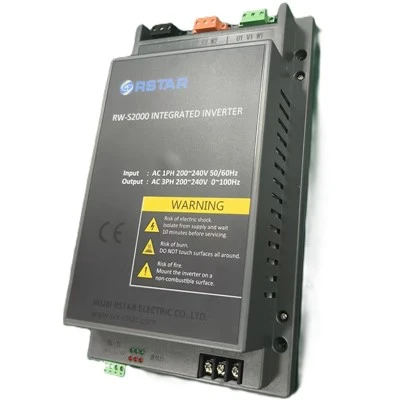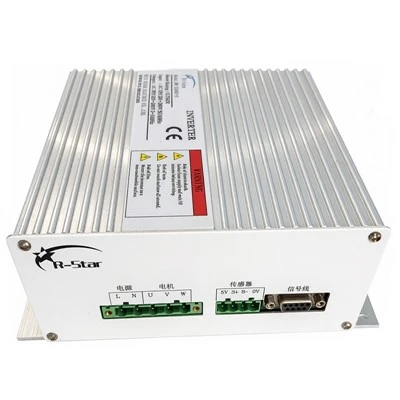
An industrial fan motor is the core driving component of a large industrial ventilation system. Its main function is to power the fan blades, creating airflow and improving ventilation and cooling performance in large spaces. Compared with conventional fan motors, industrial fan motors must support wide-area airflow, long operating periods, and high-load conditions. Therefore, they provide advanced functions in power output, speed control, safety protection, and energy efficiency.
The primary function of an industrial fan motor is to provide stable mechanical power. The motor converts electrical energy into mechanical energy, driving large fan blades to rotate continuously and generate airflow. In large spaces such as factories, warehouses, and logistics centers, strong and stable power output helps improve air circulation, balance temperature distribution, and enhance overall ventilation performance.
Speed regulation is one of the key functions of industrial fan motors. By working with control systems and variable frequency technology, the motor can adjust operating speed according to actual environmental requirements. For example, in hot environments or areas with high occupancy, the motor speed can be increased to improve airflow. During cooler periods or lower-demand conditions, the speed can be reduced to save energy and achieve more economical operation.
Industrial fan motors also provide high-efficiency energy-saving performance. Modern motor designs improve energy conversion efficiency and reduce power losses during operation. With intelligent control systems, motor performance can be adjusted according to operating conditions, preventing unnecessary high-load operation and reducing electricity costs. This supports the goals of green manufacturing and sustainable energy management.
Safety protection is another important function of industrial fan motors. During long-term operation, motors may be affected by load changes, temperature increases, or electrical abnormalities. Therefore, many systems include overload protection, temperature monitoring, and fault alarm functions. These features help detect problems quickly, activate protective measures, and prevent equipment damage.
In addition, industrial fan motors offer reliable operation and long service life. Industrial environments can be complex, requiring motors to have strong resistance to interference and environmental changes. Through optimized cooling structures, protective designs, and improved mechanical performance, motors can maintain stable operation over extended periods and provide better durability.
With the development of smart manufacturing technologies, industrial fan motors are increasingly integrating intelligent control, remote monitoring, and data management functions. In the future, industrial fan motors will play a more important role in smart factories, large-scale warehouses, and green buildings, providing more efficient, reliable, and energy-saving ventilation solutions for industrial environments.