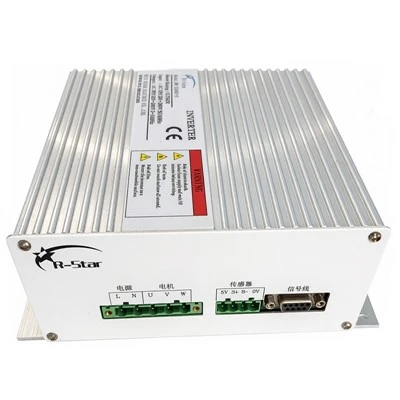
An industrial fan motor is the core power component of a large industrial ventilation system. Its structural design directly affects operating efficiency, stability, and service life. Since industrial fans often operate continuously in large spaces, the motor structure must provide strong power output, effective heat dissipation, balanced operation, and excellent environmental adaptability to ensure reliable long-term performance.
An industrial fan motor is typically composed of a stator, rotor, bearing system, cooling structure, protective housing, and connection components. The stator and rotor are the key components responsible for energy conversion. Through electromagnetic interaction, they generate rotational power. Optimized magnetic circuit design and precision manufacturing improve energy conversion efficiency and reduce operating losses, allowing the motor to maintain high performance during extended operation.
The rotor structure is an important factor affecting the output capability of an industrial fan motor. Since industrial fans drive large-sized blades, the rotor must provide sufficient strength and stability. An optimized rotor design delivers higher starting torque, enabling smooth fan startup and maintaining stable power output during continuous operation.
The bearing system is another critical part of industrial fan motor construction. High-quality bearings reduce mechanical friction, improve operating smoothness, and minimize noise and energy loss. Because industrial fans often operate for long periods, bearing durability and reliability have a significant impact on the overall service life of the motor.
The cooling structure is one of the important features that distinguishes industrial fan motors from conventional motors. Heat is generated during operation, and insufficient cooling may affect performance. Therefore, industrial fan motors usually adopt optimized airflow channels, heat dissipation components, or efficient cooling methods to improve thermal management and maintain stable operation under high-load conditions.
The protective housing structure is also an essential design element. Industrial environments may involve dust, moisture, and temperature variations, requiring motors to have strong protection capabilities. High-strength materials and sealing designs improve resistance to environmental factors and extend equipment service life.
With the development of smart manufacturing technologies, modern industrial fan motors are evolving toward lightweight design, higher efficiency, and intelligent operation. By integrating variable frequency control, intelligent monitoring, and remote management technologies, these motors can achieve more precise performance adjustment and provide stable, efficient airflow power for industrial facilities, warehouses, and large public spaces.