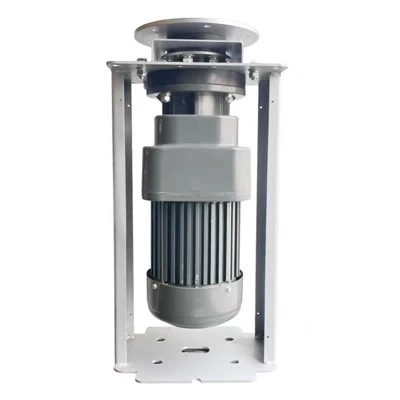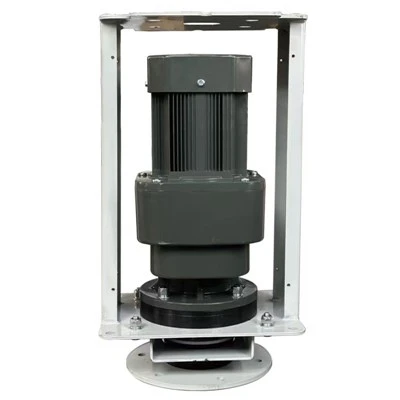

What is the starting time of a three - phase induction reduction motor? This is a question that many industrial users and engineers often ask. As a supplier of Three - phase Induction Reduction Motors Three - phase Induction Reduction Motor, I am very familiar with this topic and would like to share some in - depth knowledge in this blog.
Understanding Three - phase Induction Reduction Motors
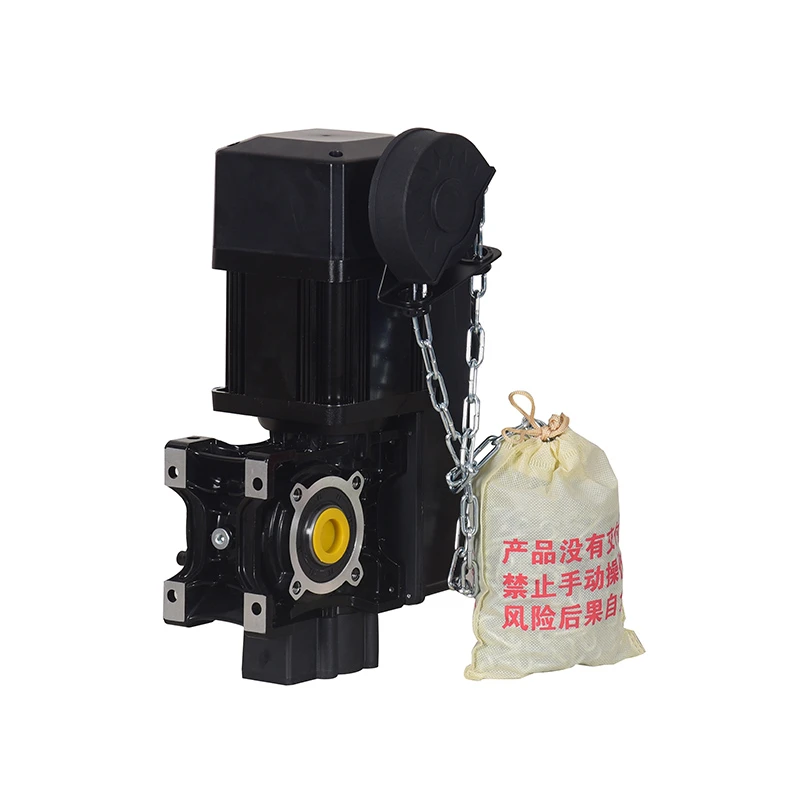
Before delving into the starting time, it is essential to understand what a three - phase induction reduction motor is. A three - phase induction motor is a type of AC motor that uses a rotating magnetic field in the stator to induce currents in the rotor, which then creates a torque to drive the motor. The reduction part typically refers to the addition of a gearbox to the motor to reduce the output speed and increase the torque. This combination makes the three - phase induction reduction motor suitable for a wide range of industrial applications, such as conveyor systems, material handling equipment, and industrial doors.
Factors Affecting the Starting Time
The starting time of a three - phase induction reduction motor is influenced by several factors:
Load Torque
The load torque is one of the most significant factors. If the load requires a high starting torque, the motor will take longer to reach its operating speed. For instance, in applications where the motor needs to start with a heavy load, like a large conveyor carrying a full load of goods or an industrial door that is fully closed and needs to be lifted, the motor will experience a high load torque at startup. In comparison, a motor driving a light - load application, such as a small fan with minimal air resistance, will have a much shorter starting time.
Moment of Inertia
The moment of inertia of the rotating parts, including the rotor and the load, also affects the starting time. A large moment of inertia means that more energy is required to accelerate the system. For example, in a flywheel - driven system, the high moment of inertia of the flywheel can significantly increase the starting time of the motor. The motor has to work harder to overcome the inertia of the flywheel and spin it up to the desired speed.
Motor Design and Power Rating
The design and power rating of the motor play a crucial role. A motor with a higher power rating generally has a shorter starting time because it can provide more torque. Additionally, the design of the motor, such as the number of poles and the winding configuration, can affect its starting characteristics. For example, a motor with a lower number of poles may have a higher synchronous speed and better starting performance, resulting in a shorter starting time.
Supply Voltage
The supply voltage is another important factor. A stable and appropriate supply voltage is necessary for a proper motor start. If the supply voltage is too low, the motor may not be able to generate enough torque to start the load quickly, leading to an extended starting time. On the other hand, if the voltage is too high, it can cause excessive current flow and potentially damage the motor.
Calculating the Starting Time
Calculating the exact starting time of a three - phase induction reduction motor is a complex process that involves considering the factors mentioned above. In general, the starting time (t_{start}) can be estimated using the following formula based on the principles of rotational dynamics:
[t_{start}=\frac{2\pi J}{60T_{avg}}\left(n_{s}-n_{0}\right)]
where (J) is the moment of inertia of the rotating parts (in (kg\cdot m^{2})), (T_{avg}) is the average accelerating torque (in (N\cdot m)), (n_{s}) is the synchronous speed of the motor (in RPM), and (n_{0}) is the initial speed (usually 0 RPM at startup).
However, this is a simplified formula, and in real - world applications, other factors such as friction, windage, and the non - linear characteristics of the motor and load need to be considered. In practice, manufacturers often provide starting time data based on specific motor models and typical load conditions.
Importance of Starting Time in Different Applications
The starting time of a three - phase induction reduction motor is of great importance in different industrial applications:
Industrial Doors
In the case of industrial doors, such as Rapid Door 3 - Phase Geared Motor and Servo Geared Motor for Sectional Door, a short starting time is crucial for efficient operation. A fast - starting motor can quickly open or close the door, reducing the waiting time for vehicles and personnel. This is especially important in high - traffic areas where time is of the essence.
Conveyor Systems
For conveyor systems, the starting time affects the overall productivity. A long starting time can cause delays in the material handling process. If multiple conveyors are connected in a line, a slow - starting motor on one conveyor can disrupt the entire flow of materials. Therefore, a motor with a short starting time is preferred to ensure smooth and continuous operation.
Hazardous Environments
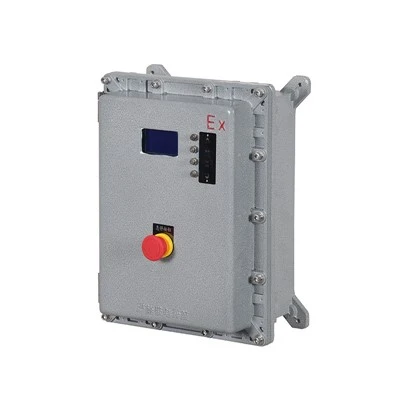
In hazardous environments, such as those where there is a risk of explosion, motors like Flameproof Asynchronous Motor and Explosion - proof Servo Asynchronous Motor are used. The starting time in these applications is critical as it needs to be carefully controlled to prevent any potential ignition sources. A long starting time with high inrush currents can pose a safety hazard, so motors are designed to have appropriate starting characteristics to meet the safety requirements.
Optimizing the Starting Time
As a supplier, we offer several solutions to optimize the starting time of our three - phase induction reduction motors:
Soft Starters
Soft starters can be used to gradually increase the voltage applied to the motor during startup. This reduces the inrush current and allows the motor to start smoothly. By controlling the rate of voltage increase, the starting time can be adjusted according to the specific load requirements.
Variable Frequency Drives (VFDs)
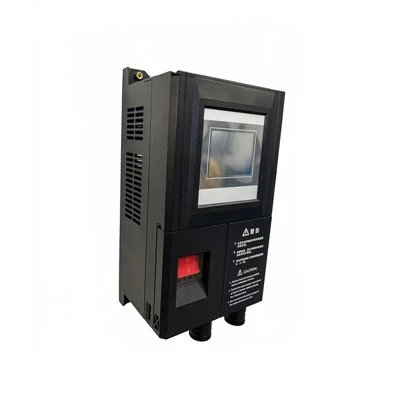
VFDs are another effective way to control the starting time. They can vary the frequency and voltage supplied to the motor, allowing for precise control of the motor's speed and torque. With a VFD, the motor can be started at a low frequency and gradually ramped up to the desired speed, which can significantly reduce the starting time and minimize the stress on the motor and the load.
Contact Us for Your Motor Needs
If you are in the market for a three - phase induction reduction motor or have any questions about starting times, motor selection, or optimization, please feel free to contact us. Our team of experts is ready to provide you with professional advice and high - quality products to meet your specific industrial requirements. Whether you need a motor for an industrial door, a conveyor system, or a hazardous environment, we have the right solution for you.

References
- Fitzgerald, A. E., Kingsley, C., & Umans, S. D. (2003). Electric Machinery. McGraw - Hill.
- Chapman, S. J. (2012). Electric Machinery Fundamentals. McGraw - Hill.